How to Stop FOMO Trading (The Feeling Is Lying to You)
FOMO trading isn't about missing opportunities. It's about your brain confusing other people's trades with your own. Here's how to see through it.
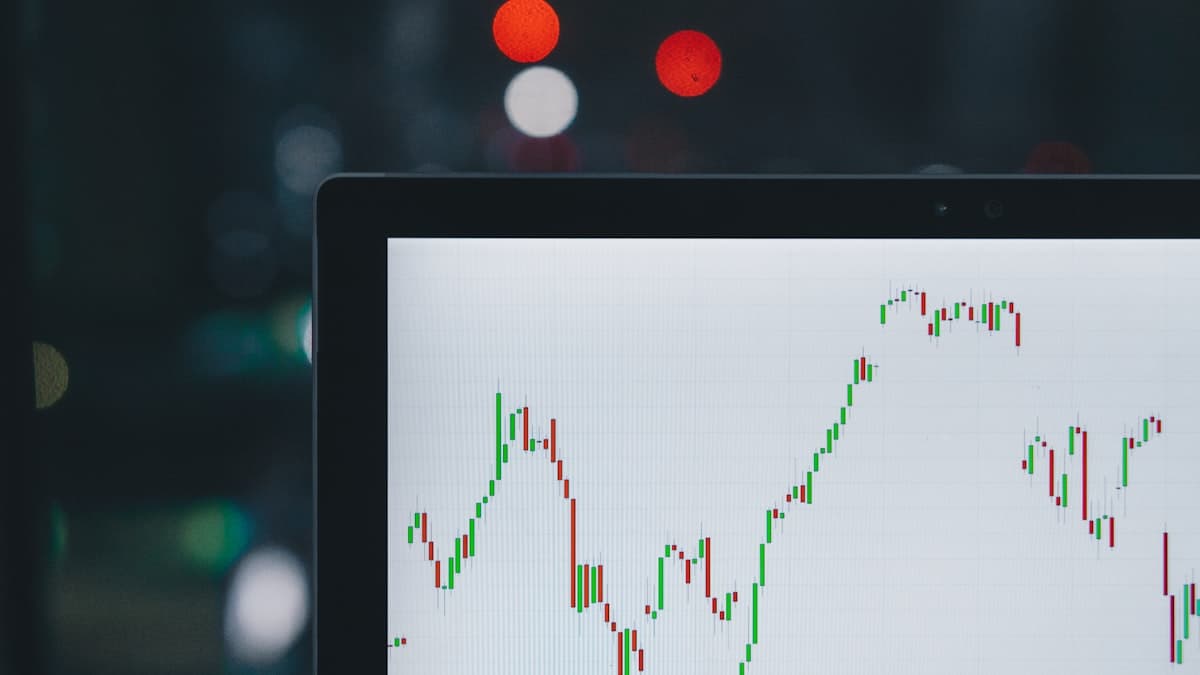
You weren't going to take that trade. You had no thesis. It wasn't on your watchlist. The setup didn't match your rules.
Then you saw the candle. Or the screenshot. Or the alert in the group chat. And thirty seconds later you were in a position you can't explain.
That's FOMO. And the frustrating part isn't that it happened. It's that you knew exactly what was happening while you were doing it.
Why FOMO is harder to fix than other trading problems
Revenge trading has a clear trigger: a loss. Boredom trading has a clear context: dead market, nothing to do. Both are identifiable in the moment if you're paying attention.
FOMO doesn't work like that. FOMO disguises itself as analysis.
"The level held, this is a real breakout." "Volume is confirming." "I've seen this pattern before, I need to act now." Every one of these sounds like a legitimate trading thesis. But when you look at the data afterward, the entries are late, the stops are wrong, and the conviction evaporates the second the trade goes against you.
FOMO trades feel like decisions. They're reactions.
The neuroscience you need to understand
Your brain processes "other people making money" the same way it processes "you are losing money." This isn't a metaphor. fMRI studies show the same neural regions activating when you watch someone else profit as when you experience a personal loss.
So when your group chat posts gains and you're sitting flat, your brain is literally in loss-processing mode. You're not calm and rational deciding whether to trade. You're in the same neurological state as someone who just got stopped out.
This is why the standard advice to "just wait for your setup" doesn't work for FOMO. Your brain has already classified this as an emergency. Waiting feels dangerous. Acting feels safe. The feeling is lying to you.
What FOMO trades actually look like in the data
I want to be specific because vague descriptions don't change behavior.
Pull up your last 60 days of trades. Filter for trades that entered in the top or bottom 20% of that session's range. Look at these metrics:
Entry timing. FOMO trades enter after 60-80% of the move has already happened. You're not catching a trend. You're arriving at the party as everyone else is leaving.
Position sizing. FOMO trades tend to be either oversized (because the urgency makes you feel more certain) or undersized (because some part of you knows this is wrong, so you hedge with smaller size). Both are tells.
Hold time. FOMO trades get closed faster than normal trades. Either you take profit too early because you were never confident, or you cut the loss immediately because the late entry gives you no room for the stop.
Win rate. If your overall win rate is 45%, your FOMO trades are probably closer to 25-30%. Not because you're a bad trader. Because entering late with no edge produces exactly the results you'd expect.
The information diet fix
Every trader I've watched solve their FOMO problem did the same thing, and none of them wanted to do it.
They cut their information intake.
Left the Discord. Muted the Twitter accounts. Stopped watching tickers they weren't planning to trade. Removed the multi-monitor setup and went to one screen.
This sounds dramatic. It felt dramatic to them too. But here's why it works: FOMO requires comparison. You can't fear missing out if you don't know what you're missing. The feeling isn't generated by the market. It's generated by watching other people interact with the market.
One trader I know went from an average of 12 trades per day to 4 trades per day by doing nothing except leaving two Discord servers and unfollowing 30 accounts on Twitter. His strategy didn't change. His thesis process didn't change. He just stopped injecting triggers into his brain all day.
His win rate went from 38% to 51% in the same month. Not because he got smarter. Because he stopped taking the 8 trades per day that had no edge.
The 5-minute rule that actually works
If you won't cut your information sources, try this instead.
When you feel the urge to take a trade you didn't plan, set a timer for 5 minutes. Not a mental timer. A physical timer on your phone. During those 5 minutes, write down three things:
- What is my thesis for this trade?
- Where is my stop?
- Would I take this trade if I hadn't seen [the tweet / the screenshot / the candle]?
Question 3 is the one that matters. If the honest answer is no, you don't take the trade. If you find yourself rationalizing why the answer is actually yes, you definitely don't take the trade. Rationalization is FOMO wearing a suit.
Most traders report that by the time the 5 minutes are up, the urge has passed. The prefrontal cortex needs about 90 seconds to re-engage after an emotional trigger. Five minutes gives you a margin of safety.
The deeper problem nobody mentions
FOMO isn't really about missing trades. It's about identity.
When you see other traders making money and you're sitting flat, the feeling isn't "I'm missing a good trade." The feeling is "I'm falling behind. I'm not good enough. They know something I don't."
That's not a trading problem. That's a comparison problem. And it doesn't go away when you make money, because there will always be someone making more. The trader who makes $500 today feels FOMO watching someone make $5,000. The trader who makes $5,000 feels it watching someone make $50,000.
The traders who actually solve FOMO are the ones who stop measuring their performance against other people and start measuring it against their own process. "Did I follow my rules?" replaces "Did I make as much as that guy?"
This is harder than it sounds. But it's the only fix that lasts.
The uncomfortable math
Count your FOMO trades from the last 30 days. Calculate the total P&L from just those trades.
For most traders, removing FOMO trades doesn't just improve their win rate. It improves their total P&L. You're not missing money by sitting out. You're losing money by chasing.
The feeling says you need to be in the market. The data says the opposite. Trust the data.
Jeremy Mlynarczyk
Trader and builder of Daules. Got tired of journaling without learning anything. Built the tool I wished existed.
Try Daules freeRelated
Your FOMO trades have a signature.
Daules tracks where you enter relative to the move, how your sizing changes when you chase, and what your win rate looks like on late entries. The pattern is already in your data.
Start free